Tuesday, 30 January 2024
TOOL: Journaling with the Apple Journal App
Cleaning up your digital desktop
A fundamental building block of Simpler Smarter Quicker is to have a well organised desktop and in this post I'm referring to your digital desktop. I have a Microsoft 365 subscription and the video I have chosen will provide you with good tips on how to turn (possibly)your muddle into a well designed layout.
Click on this link:- Organise your Computer
TOOL: Apple Reminders are Awesome
I know for my age group as a pensioner, that I am unusual, as I am mostly paper free. I take boarding passes, train tickets and theatre tickets virtually into my Apple wallet. When I want to do any creative thinking, I use the iThoughts app and create my mindmaps on my iPad. For recipes, I use Apple Notes and scan magazines, or cut and paste into a Note. When I cook, I use my iPad to view the recipe.
For my shopping list I use Apple Reminders with Siri 'Siri, add eggs to My Shopping List' which makes it very easy as I can just talk through my Apple Watch when I'm busy in the kitchen. I have also used the 'shopping' template so what I need to buy is sorted into categories which makes it easy when I hit the supermarket to shop in a systematic way. Anything to minimise my time spent there! This year I set up my Christmas List and gave my family access to the list. They could then access all items which were linked to a retailer (mostly Amazon) and if they chose the present they could click on it and prevent anyone else from buying the same item. I also use reminders for UK Attractions we plan to visit and I have a Watch List for tv programmes (too many choices and its confusing) broken down by channel. Also, of massive value to me, I have a Holiday Checklist that takes the anxiety out of going off on holiday.
NOTE: as you get older your memory is not that good, so having access to Reminders is a great help.
For people wanting to learn how to work in a Simpler Smarter Quicker way, Reminders is a very valuable tool. I have inserted a great video from Proper Honest Tech which provides 14 Tips & Trick that will help you to take Reminders to a whole new level.
Monday, 29 January 2024
TOOL: In Praise of the Humble Checklist
Many years ago when I was involved in a large quality improvement programme we were introduced to the need for having checklists. I remember being underwhelmed but participated in spite of my negativity.
What is a checklist?
I now totally believe in checklists
- I knew from the start what needed to be done
- I wasn't relying on my memory for the steps
- My level of anxiety went down quite dramatically
- I was more systematic in the way I worked
Do I still use checklists?
- Travel - holiday details, book taxi, check in for flights, passport, NHS app (vaccination details), Insurance4HireCars etc
- Banking - top up Revolut with foreign currency, cash for airport taxi
- Medication - order pills and fill meds box
- Gadgets - my full Apple environment & Kindle plus chargers
- Entertainment - Sky, Netflix and Prime downloads to my iPad
- Car - (if using) clean, check tyres, fill tank, update AA app, destination address.
- Clothes - clothes relevant to the type of holiday that I'm going on
- Bathroom - charged saver, charged toothbrush, suntan lotion, insect repellant etc
Achieving Success in Your Life
Simpler Smarter Quicker is a programme aimed at helping people to achieve success in their studies, in their jobs and in their lives. Calling it a time management course is understating the value of the programme. The programme covers the following areas:-
- Focus on what really matters - I have come across so many people who have drifted through their lives not really knowing what they want and so often I have seen wasted potential. With just a little bit of effort you can start to understand the most important areas of your life.
- Get yourself organised - some people are just naturally good at getting things done but many, including myself, need a bit of help to clear out the muddle, simplify and put some order and good habits in place.
- Plan your day - time is scarce and very precious and needs to be allocated to get the right things done with the minimum of effort.
- Develop new habits - a lot of our success in life comes down to getting rid of bad habits and putting in place good habits that will help you to automatically do the right think. I like many struggle with putting off boring jobs - procrastinating. Via the programme I put in place a new habit called Do it NOW and that made a huge difference.
- Learn new skills - in an ever changing world we do need to be constantly learning new skills. This applies at any age as we need to learn new skills to help and enhance their lives. Oldies who struggle with small keyboards on their iPhones should be using (dictating) siri to add reminders, navigate and write messages.
- Communicate effectively - so often I have seen how a poorly written email or WhatsApp message has failed to deliver and resulted in confusion and upsetting relationships.
- Reduce waste - we are surrounded by mountains of waste, but just think of the time that is wasted. Spending hours working on a project and then realising that you have misread the request for your input.
- Get buy in from others - we achieve very little on our own and are dependent on working and achieving together with other people. So, getting others on board with your projects can be a critical requirement.
- Power up your personal energy - having enough time is important but we also need the energy to get the jobs done. We can't increase time but we can increase our energy through (to name a few things) better hydration, sleep and exercise.
- Run great meetings - bad meetings are a big source of wasted time and energy, but a good meeting can be motivating, energising and gets things done!
Developing a Growth Mindset
What is a mindset?
A mindset is a set of beliefs that shape how you make sense of the world and yourself. It influences how you think, feel, and behave in any given situation . There are two basic mindsets: fixed and growth. If you have a fixed mindset, you believe your abilities are fixed traits and therefore can’t be changed. You may also believe that your talent and intelligence alone lead to success, and effort is not required. On the flip side, if you have a growth mindset, you believe that your talents and abilities can be developed over time through effort and persistence. People with this mindset don’t necessarily believe that everyone can become Einstein or Mozart just because they try. They do, however, believe that everyone can get smarter or more talented if they work at it .
What is an Achievers Mindset
An achiever’s mindset is a mental framework that helps people reach their goals and succeed in their endeavors. It is characterized by growth, persistence, adaptability, focus, positivity, self-awareness, courage, collaboration, goal-orientation, time management skills, resourcefulness, and a commitment to continual learning 123. High achievers understand the power of belief and the impact it has on their reality. They possess a positive mindset, fueled by optimism and a strong belief in their abilities. They know that their thoughts and beliefs shape their actions and outcomes 1.
What is a Winners Mindset
A winner’s mindset is a mental framework that helps people achieve their goals and succeed in their endeavors. It is characterized by high intention, sincere effort, and intelligent execution towards the achievement of a desired target 1. Here are some key factors that contribute to a winning mentality:
- Self-awareness: Knowing what you want in life is crucial to developing a winner’s mindset. Clarity about one’s goals is an integral part of a winner’s mentality. When you know what you’re looking for, it’s easier to find it 1.
- Responsibility: Winners take responsibility for their actions and decisions. They don’t blame others for their failures and instead learn from their mistakes 1.
- Perseverance: Winners don’t give up easily. They keep pushing themselves even when things get tough. They are determined to succeed and are willing to put in the hard work required to achieve their goals 2.
- Positive attitude: Winners maintain a positive attitude even in the face of adversity. They believe in themselves and their abilities and are confident that they can overcome any obstacle 3.
- Continuous learning: Winners are always looking for ways to improve themselves. They are open to new ideas and are willing to learn from others 2.
I think to survive and thrive in today's world you need to develop a Growth Mindset.
A growth mindset is characterized by embracing challenges, valuing effort over natural ability, seeing failure as an opportunity for growth, and a willingness to learn from mistakes. Here are some additional characteristics of a growth mindset:
- Persistence: A growth mindset is characterized by a willingness to persist in the face of setbacks and obstacles.
- Effort and Hard Work: People with a growth mindset believe that their abilities can be developed through hard work and dedication.
- Openness to Feedback: Individuals with a growth mindset are open to feedback and willing to learn from others.
- Flexibility: People with a growth mindset are adaptable and flexible. They are willing to change their approach when necessary.
- Positive Attitude: A growth mindset is characterized by a positive attitude towards learning and growth. People with this mindset believe that they can improve their skills and knowledge with effort.
Developing a growth mindset takes time and effort, but it is possible for anyone to achieve. Remember, as famous author Zig Ziglar said: “Attitude is more important than aptitude.” With the right mindset, you can achieve your goals and succeed in your endeavors.
Here is a good video explaining the Growth Mindset in a bit more detail.
Monday, 22 January 2024
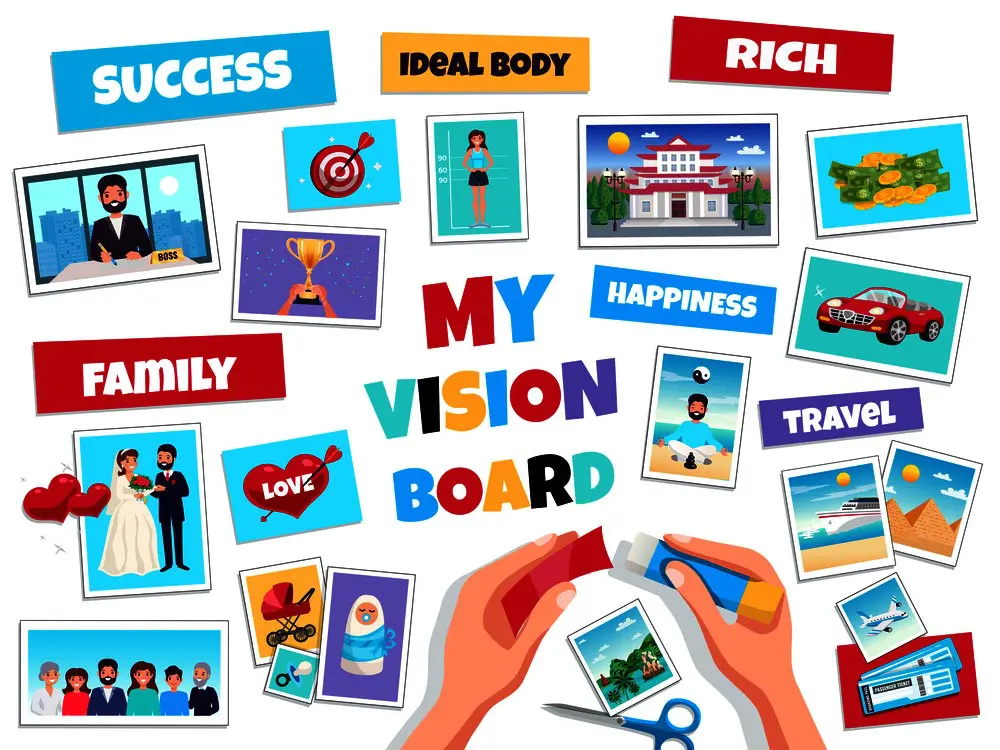
TOOL: Creating your Vision Board
About twenty years ago when I was on a Coaching training course I ended up chatting to a fellow delegate and he shared the story of his family goal setting process. He told me that early every January he would sit down with his wife and children and they would create a picture using photos, cut outs from magazines, plus words that captured all the things they wanted to happen in the coming year. They framed the picture and hung it in their kitchen / diner area. When I asked him if it worked he said 100% every year and the whole family saw it as a fun exercise. About ten years later I wanted to incorporate this exercise into Simpler Smarter Quicker, so I contacted him and asked if they still use the 'vision board' process and he said a strong yes!!!
Using images to set goals for the coming year is a great way to visualise your aspirations and stay motivated.
Here are some tips on how to do it:
Choose a theme: Decide on a theme that resonates with you and your goals for the year. It could be anything from travel to fitness to career growth.
Find images: Look for images that represent your theme and goals. You can use search engines to find relevant images.
Create a vision board: Once you have your images, create a vision board by arranging them on a board or a piece of paper.
Place your vision board in a visible location: Place your vision board in a location where you will see it every day. This will help you stay focused on your goals and motivated to achieve them.
Using images to set goals works so well because it helps you visualise your aspirations and stay motivated. It’s a powerful tool that can help you stay on track and achieve your goals.
So, start your year by creating your personal Vision Board that will motivate you to have a very good year.
Here are a few examples:-
Tuesday, 16 January 2024
Bad Habits ---> Good Habits
In my experience working with people and helping them to work simpler, smarter and quicker. Mostly, they know what to do to improve their efficiency but they don't do what they know. A big part of this is that they have bad habits and struggle to change them.
I did an AI seach of the bad habits that mess up the management of that scarce resource time. This is the list of the top 10 major thieves of time.
- Not setting concrete goals: Without clear goals, it’s hard to distinguish important tasks from distractions. To create achievable goals, try the SMART method: Specific, Measurable, Achievable, Relevant, and Time-bound.
- Failing to follow a to-do list: Starting work without a plan usually leads to bad time management. A good to-do list should be consistent, specific, and time-aware.
- Prioritising ineffectively: Prioritising tasks based on their urgency rather than their importance can lead to poor time management. The Eisenhower Matrix can help you prioritise tasks based on their importance and urgency.
- Scheduling poorly: Scheduling too many tasks in a day or not scheduling enough time for a task can lead to poor time management. To schedule effectively, try time blocking.
- Disorganised meetings: Meetings that lack structure or go off-topic can waste time. To make meetings more productive, set an agenda and stick to it.
- Allowing distractions: Distractions such as social media, email, or phone calls can disrupt your workflow.
- Tendency to multitask: Multitasking can lead to poor time management and decreased productivity. Instead, try focusing on one task at a time.
- Having too much to do: Overcommitting yourself can lead to poor time management. To avoid this, learn to say no and delegate tasks when possible.
- Aiming for perfection: Striving for perfection can lead to procrastination and poor time management. Instead, aim for progress over perfection.
- Procrastination: Delaying tasks can lead to poor time management. To overcome procrastination, try breaking tasks into smaller, more manageable steps.
Confessions of a corporate warrior
|
Four Laws
of Behaviour Change |
New System
– Good Habit |
|
The 1st law (Cue): Make it obvious. |
Put all
dockets into a transparent envelope and place in a highly visual place. |
|
The 2nd law
(Craving): Make it attractive |
Following the
DO IT NOW approach and the pleasure of ticking off another potentially messy job. |
|
The 3rd law
(Response): Make it easy |
All documents in one place and clear system in place and it would take less than 30 minutes
to complete the claim! |
|
The 4th law
(Reward): Make it satisfying |
Cash in bank in one week and a feeling that I had beaten the system. I would have the money in my bank account on average 4 weeks before I would have to pay my credit card. |
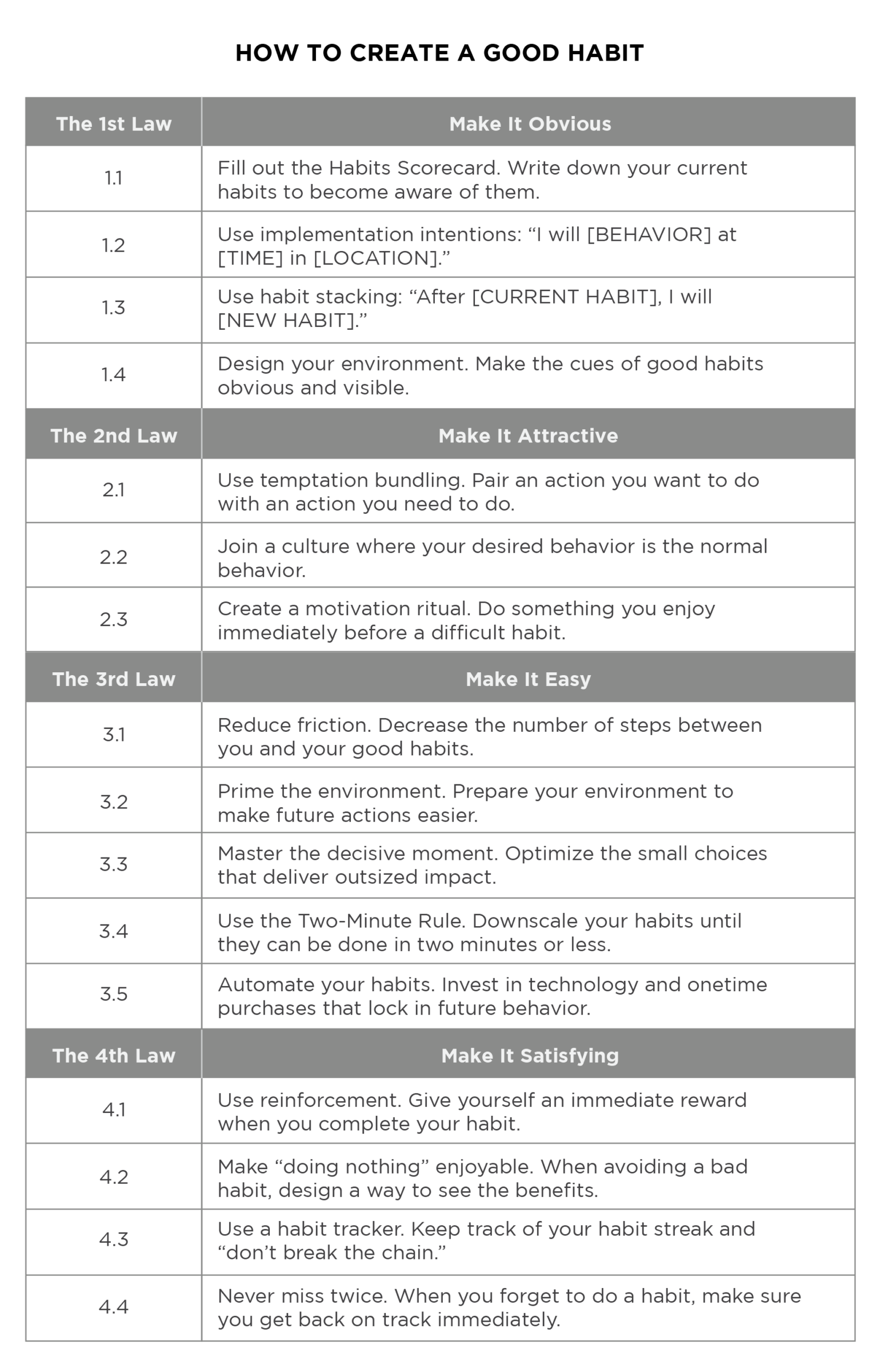
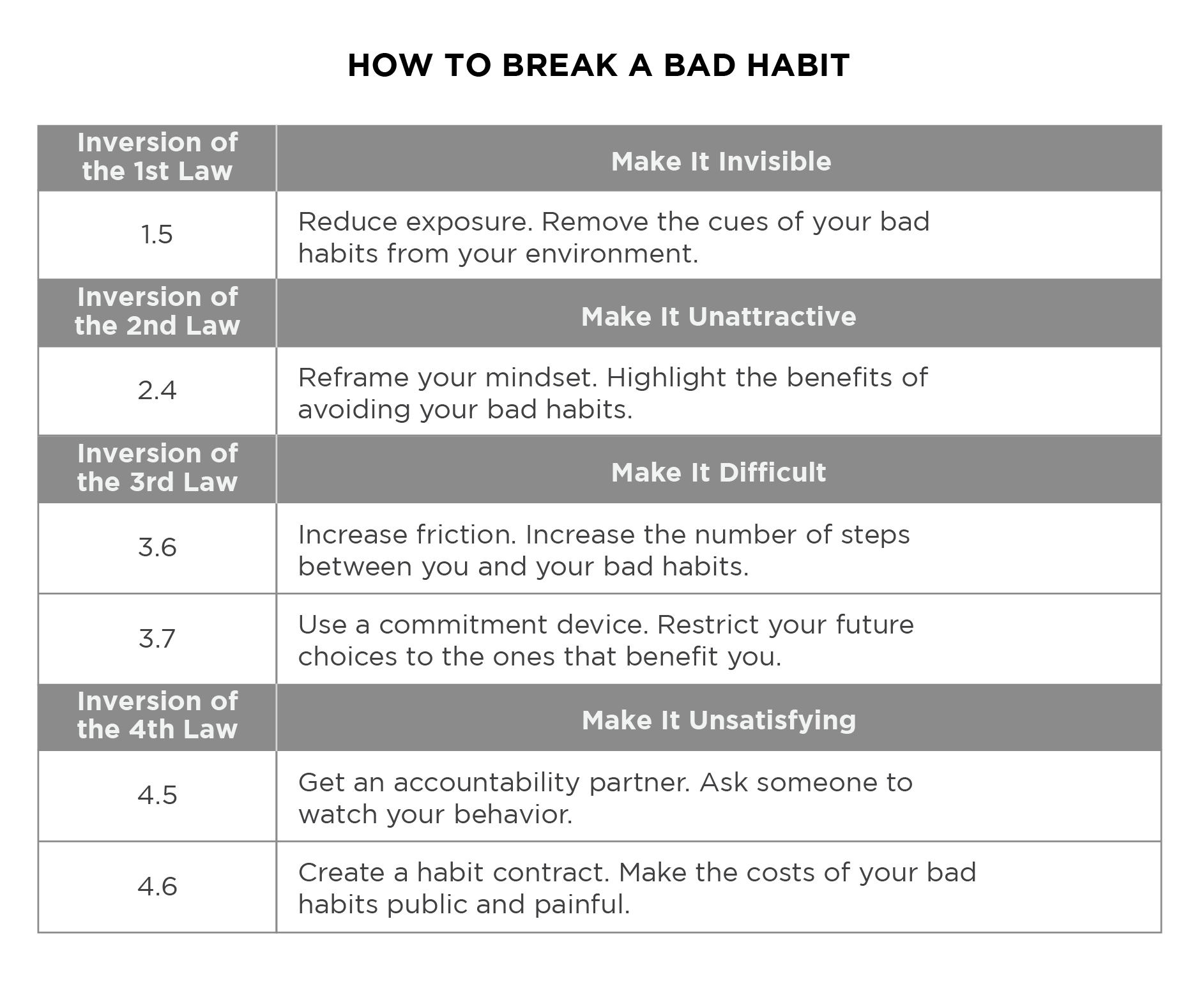
Atomic Habits summary cheat sheet
This useful Atomic Habits summary cheat sheet compresses many of the key ideas and insights from the book into a handy reference guide for how to build a good habit or break a bad one.


Monday, 15 January 2024
Why do you exist?
The clearer you are on what is your mission in life, the easier it will be to get yourself organised for success. This Mark Twain quote sums up the challenge we all face with wonderful simplicity.
I do feel for my granddaughters, having to make up their minds at 16 as to what they want to do with their lives. I cast my mind back to when I was that age (that's a long time back :-)) and I was heavily influenced by my family being accountants. As a teenager I earned holiday money adding up columns of figures on an old fashioned adding machine working in the family business. So, guess what, I became an article clerk at Deloittes and qualified as a Chartered Certified Accountant (how imaginative). In my actual career, although I have never regretted training as an accountant, I have done everything to avoid being an accountant!
What I discovered as I progressed in my career, was that I really enjoyed training and coaching people. As I rose up through the ranks I realised my natural default leadership style was as a coach. I think it was in my mid thirties that I finally discovered why I had been born. I had stumbled on my reason for being and that was to release the magic in others. This realisation really shaped the last years of my corporate career and resulted in me setting up my coaching business Release the Magic which I ran for 10 years after I had retired from Nestlé.
My advice to my young granddaughters, is that choosing a career is a process, and it’s okay to take time to work things out. But, stay positive and keep exploring different options until you find something that feels right for you.
- What do you enjoy doing?
- What are you passionate about?
- What are your strengths?
- What are your struggles?
- What are the values that you want to live by?
Tuesday, 9 January 2024
Happy New Year 2024
The start of a new year is always a good time to make plans and hopefully not set yourself up for failure by making too many crazy new year's resolutions. As a family we went to see the new Wonka film and it was great. I know it is aimed at a younger audience but I loved it and I think Timothée Chalamet is excellent.
One of his sayings that resonated with me was....
Every good thing in this world starts with a dream. So you hold onto yours. – Wonka
I think that is a great start to everyone's year to have dreams of what they want to achieve, experience and enjoy.
I look back on my life when in 1986, living in apartheid South Africa, I had a dream of moving to Great Britain and giving my children the opportunity to live in a more free and inclusive society. Now 38 years later I look at my children and grandchildren all settled and motivated by their lives. I feel so happy that we did the right thing, but it all started as a dream.
Wonka's dream was to create the greatest chocolate of the world and sharing it with the world.
So start your year with dreams and I asked my friendly Copilot (Microsoft’s AI tool) what questions we should be asking of ourselves right now.
If you’re looking to make 2024 your best year yet, here are some questions you can ask yourself to gain clarity and insight:
- What are the things that you want to achieve in 2024?
- What are the things that you want to let go of in 2024?
- What are the things that you want to learn in 2024?
- What are the things that you want to experience in 2024?
- What are the things that you want to improve in 2024?
- What are the things that you want to give back in 2024?
These questions are inspired by the Mel Robbins Podcast episode 131. The podcast provides a 29-page companion workbook that can help you get clear about what you want and empower you to take the next step forward in your life
You can find the workbook at https://www.melrobbins.com/bestyear