In my experience working with people and helping them to work simpler, smarter and quicker. Mostly, they know what to do to improve their efficiency but they don't do what they know. A big part of this is that they have bad habits and struggle to change them.
I did an AI seach of the bad habits that mess up the management of that scarce resource time. This is the list of the top 10 major thieves of time.
- Not setting concrete goals: Without clear goals, it’s hard to distinguish important tasks from distractions. To create achievable goals, try the SMART method: Specific, Measurable, Achievable, Relevant, and Time-bound.
- Failing to follow a to-do list: Starting work without a plan usually leads to bad time management. A good to-do list should be consistent, specific, and time-aware.
- Prioritising ineffectively: Prioritising tasks based on their urgency rather than their importance can lead to poor time management. The Eisenhower Matrix can help you prioritise tasks based on their importance and urgency.
- Scheduling poorly: Scheduling too many tasks in a day or not scheduling enough time for a task can lead to poor time management. To schedule effectively, try time blocking.
- Disorganised meetings: Meetings that lack structure or go off-topic can waste time. To make meetings more productive, set an agenda and stick to it.
- Allowing distractions: Distractions such as social media, email, or phone calls can disrupt your workflow.
- Tendency to multitask: Multitasking can lead to poor time management and decreased productivity. Instead, try focusing on one task at a time.
- Having too much to do: Overcommitting yourself can lead to poor time management. To avoid this, learn to say no and delegate tasks when possible.
- Aiming for perfection: Striving for perfection can lead to procrastination and poor time management. Instead, aim for progress over perfection.
- Procrastination: Delaying tasks can lead to poor time management. To overcome procrastination, try breaking tasks into smaller, more manageable steps.
Confessions of a corporate warrior
|
Four Laws
of Behaviour Change |
New System
– Good Habit |
|
The 1st law (Cue): Make it obvious. |
Put all
dockets into a transparent envelope and place in a highly visual place. |
|
The 2nd law
(Craving): Make it attractive |
Following the
DO IT NOW approach and the pleasure of ticking off another potentially messy job. |
|
The 3rd law
(Response): Make it easy |
All documents in one place and clear system in place and it would take less than 30 minutes
to complete the claim! |
|
The 4th law
(Reward): Make it satisfying |
Cash in bank in one week and a feeling that I had beaten the system. I would have the money in my bank account on average 4 weeks before I would have to pay my credit card. |
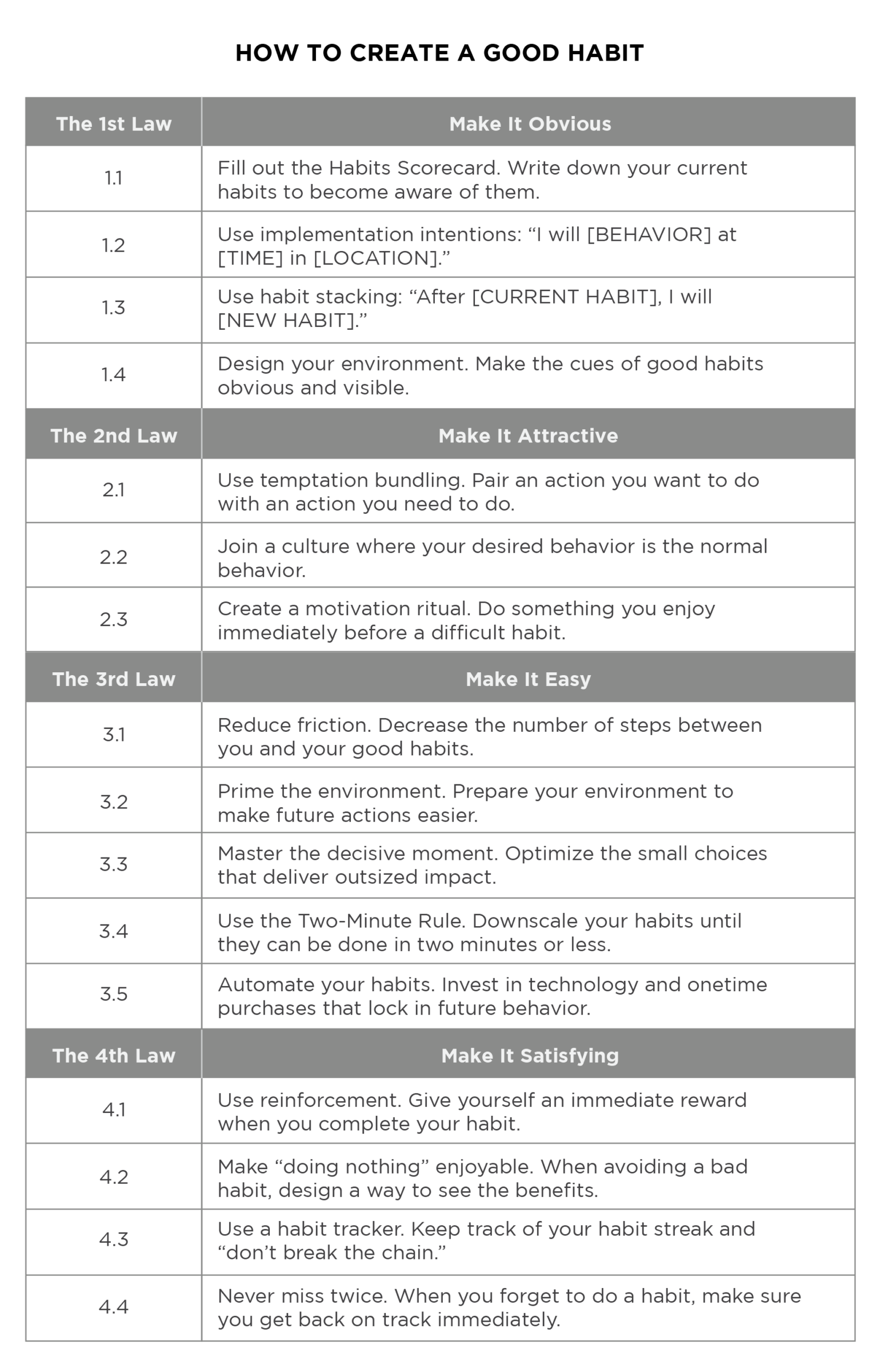
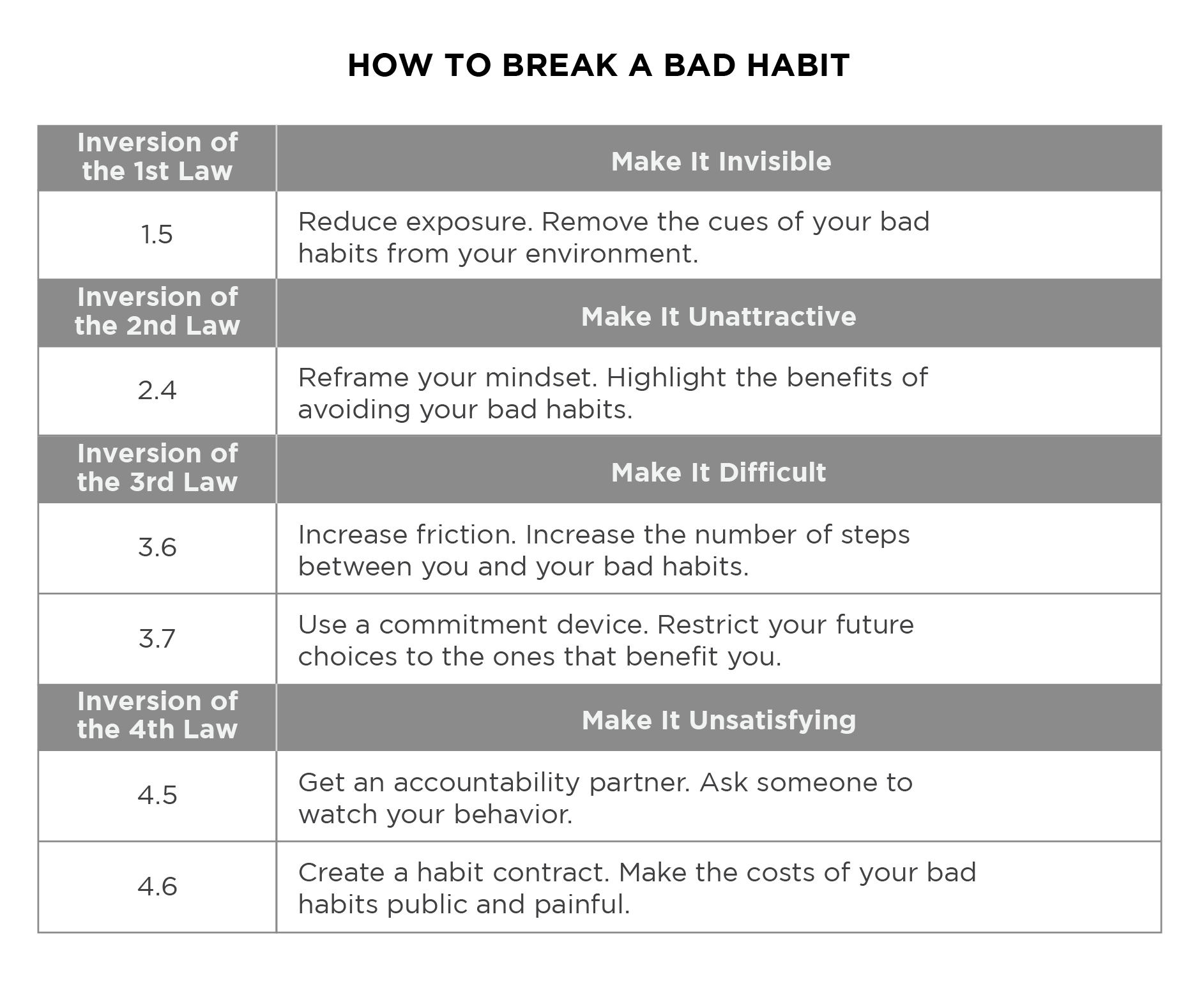
Atomic Habits summary cheat sheet
This useful Atomic Habits summary cheat sheet compresses many of the key ideas and insights from the book into a handy reference guide for how to build a good habit or break a bad one.

No comments:
Post a Comment