Wednesday, 14 February 2024

The Golden Circle meets SimpleMind

What is the Golden Circle

Consciously or not, the leaders who truly inspire people do so by following a naturally occurring pattern that Simon Sinek calls The Golden Circle.

The Golden Circle provides compelling evidence of how much more we can achieve if we start everything we do by first asking a simple question: “Why?”  It finds order and predictability in human behavior. Put simply, The Golden Circle helps us understand why we do what we do.

The Golden Circle can be used as a guide to vastly improve every aspect of your business or organisation—from leadership and hiring, to product development, sales, and marketing.

It even explains loyalty and how to earn more. And it all starts with WHY.
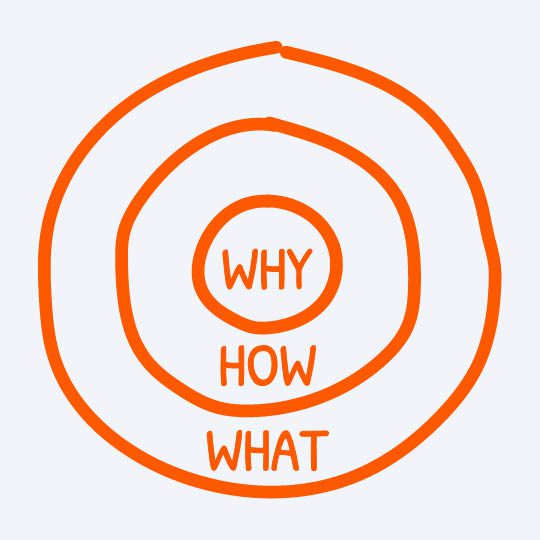


Let’s define the rings of The Golden Circle, starting with WHY (of course!) and moving outward.


WHY

Very few people or companies can clearly articulate WHY they do what they do. When Simon asks WHY, he’s not referring to making money—that’s a result. Your WHY is your purpose, cause, or belief. WHY does your company exist? WHY do you get out of bed every morning? And WHY should anyone care about the work you do?

When most organizations or people think, act, or communicate, they do so from the outside in (from WHAT to WHY). We say WHAT we do, we sometimes say HOW we do it, but we rarely say WHY we do it. But the WHY is the most crucial part of any endeavor or communication.

For example, the WHY of The Optimism Company is to inspire people to do the things that inspire them so that, together, each of us can change our world for the better.

HOW

Companies and people know HOW they do what they do and can typically communicate these processes clearly. HOWs are often utilised to explain that a product or service is better than a competitor’s—but HOWs can be so much more than that.

Our HOWs are the actions we take when we are at our natural best and are living out our WHY. It’s HOW you bring your WHY to life that makes you and your company unique. As a result, the combination of your WHY and HOWs is like your organization’s fingerprint.

Revisiting our example, these are the HOWs of The Optimism Company: keep our offerings simple, adopt an infinite mindset, try to see things from unconventional perspectives, and always find the silver lining.

WHAT

Every single company and organization on the planet knows WHAT they do. This is true no matter how big or small, and no matter what industry. Everyone is easily able to describe the products or services a company provides or the job function they have within that system. WHATs are easy to identify and important to have, but are less impactful than the WHY.

To round out our example, the WHATs of The Optimism Company are our classes, courses, keynotes, podcast episodes (and so much more) that encourage people to learn and grow their human skills of leadership, communication, and trust.

The inspired leaders—every single one of them, regardless of their industry—think, act, and communicate from the inside out.

People don’t buy WHAT you do, they buy WHY you do it.


Applying the Golden Circle to my life

I love the Golden Circle and see it as something we should just build into our day to day life. Through my coaching business I have encouraged many people to take on a new powerful habit, always start with the WHY. Essentially, find out the excitement in the work that they are doing.

When I was working my WHY and my passion and excitement was about releasing the magic in people.

WHY: 

We believe that in everything we do we will seek to release the magic in people

HOW:
  • We will dare to take people out of their comfort zones and experience new things
  • We will put nurturing coaching support at the heart of all our programmes
  • We will ensure that what people learn is easy to grasp and that it has a lasting effect 
  • We will look to energise and excite people about what can be done, rather than weigh them down with what can’t be done
  • We will support our learners to become teachers and coaches, so that they may release the magic in others
The WHAT were the different programmes that we designed and ran and in every case they had to fit in with the WHY and HOW. To me this was the 'emotion' that drove me to continue running my business deep into my 70s. Even now it is what drives me to help my granddaughters and friends. I love it because it is a win-win, as I help people to improve something in their lives and in the process I feel values, happy and fulfilled.

Meeting up with SimpleMind


I have just recently bought the Pro version of Simple Mind at a cost of £9.99 and I'm bust getting learning by doing. It's perfect for creating a Golden Circle for your life, your job or a project and the joy is everything fits on a single page if you want to print it out and keep it in a highly visual place. 

In the example the central theme is the WHY that I used with clients who wanted to develop a Coaching Culture. The HOW are the high level drivers and I have listed 7 key drivers.

Then for one of the drivers 'Get sustained high level support' I have listed a few examples of WHAT which you can see at the top. Simple Mind gives you the facility to add a check mark (you can tick it when the job is done) and set a date for completion. You can even get the date for completion dropped directly into your calendar. 

It's a great combination and for £10 it provides you with a wonderful tool that you can use to simplify and clarify the important things in your life.


I've just turned 80 and still loving my life, so I still have a life golden circle and yes, its largely based on leisure but it still provides me with the right things that make a difference to my  life at this stage.


Monday, 12 February 2024

How to use Apple Freeform

Unleashing Your Creativity with Apple Freeform on iPad: A Simple Guide

Freeform on iPad is your digital playground for brainstorming, organizing, and collaborating on anything that sparks your imagination. Here's a quick guide to get you started:

1. Dive In: Open the Freeform app on your iPad. You'll land on a boundless canvas, ready to be filled with your ideas.

2. Add Your Magic:

  • Text: Tap the "Aa" button and type anything you wish - notes, lists, headlines, quotes, you name it!
  • Drawing: Unleash your inner artist with various pen and brush options. Scribble, sketch, or create diagrams to visually represent your thoughts.
  • Photos & Files: Tap the "+" button and explore your Photos app, iCloud Drive, or other file sources to add images, documents, web links, even PDFs.
  • Stickers & Shapes: Spruce up your Freeform board with playful stickers and various shapes to highlight key points or add a touch of fun.

3. Organise & Connect:

  • Drag & Drop: Move elements around freely to arrange them according to your flow of thought.
  • Zoom & Pan: Use your fingers to zoom in on details or pan across the canvas for a broader view.
  • Connectors: Draw lines between elements to visualize connections and establish relationships within your ideas.

4. Collaboration Magic (Requires iCloud):

  • Invite Others: Tap the "Share" button and invite friends or colleagues to collaborate on your Freeform board.
  • Real-time Updates: Everyone you invite can see and edit the board instantly, fostering dynamic brainstorming and teamwork.
  • Communication: Chat directly within the board to discuss ideas and coordinate edits.

5. Beyond the Basics:

  • Backgrounds: Choose from different background colors or images to set the mood for your board.
  • Search: Tap the magnifying glass to search for specific elements within your board.
  • Export: Share your finished masterpiece as a PDF, image, or even a Freeform file for others to open and interact with.

Remember:

  • There's no "right" way to use Freeform. Experiment, explore, and let your creativity flow!
  • Use gestures like pinching and swiping for additional options and controls.
  • Don't hesitate to explore the app's settings for further customization.

With these simple steps, you're ready to embark on your Freeform adventure! So grab your iPad, unleash your imagination, and see where your mind takes you.

Apple support 'How to Use Freeform'


NEXT-LEVEL Apple Freeform App Tips & Tricks!


Mind mapping with SimpleMind Pro

I discovered mind mapping many years ago and have used it consistently ever since then. I love the technique and the clarity that it brings to my thinking. 

A guide to mind mapping

A mind map is like a brainstorming web that helps you organize and explore ideas. Here's how to make one in simple steps:

1. Grab the main idea: Write your main topic in the center of a page or screen. This could be anything you want to understand, solve, or plan.

2. Branch out! Draw thick lines radiating from the center, each leading to a main branch related to your central idea. Think of them as key categories or questions.

3. Get detailed: On each branch, add smaller branches with keywords, phrases, or images that connect to the main branch. Don't worry about order or neatness, just let your ideas flow!

4. Keep exploring: From the smaller branches, add even more details, questions, or connections. Remember, the goal is to spark creativity and uncover hidden links between your ideas.

5. Make it your own: Use fun colors, symbols, or pictures to visually represent your thoughts. This helps your brain remember and connect information better.

Bonus tips:

  • Don't judge, just write down whatever comes to mind.
  • Use short, clear words or phrases.
  • Leave space for more branches, your mind map can grow!
  • Don't be afraid to connect branches from different parts of the map, show those relationships!
  • Use mind mapping software if you prefer digital tools.

Remember, there's no "right" way to mind map. Have fun and let your ideas flourish! 

Why I chose SimpleMind Pro

Most of the mind maps I have done have been manual using muti coloured pens and they have been great. However over the last ten years I have found doing mind maps on my iPad Pro to be nice and easy with lots of additional features. I used iThoughts for many years, but as I was starting to have a few technical problems and noticed that the supplier had disappeared from the app store. So, I went in search of an app that had a one off reasonable cost and that was easy to use. My  search led me to SimpleMind Pro costing £10.

Pros of SimpleMind Pro:

  • Advanced features: Compared to the free version, SimpleMind Pro unlocks a wealth of features for more powerful mind mapping:

    • Collaboration: Work on mind maps simultaneously with others in real-time.
    • Styles and themes: Apply pre-designed or custom styles and themes for consistency and visual appeal.
    • Export options: Export your mind maps as high-quality images, PDFs, text outlines, and even presentations.
    • Cloud storage and sync: Keep your mind maps backed up and accessible across devices with cloud storage integration (e.g., Dropbox, OneDrive).
    • Password protection: Secure sensitive information by password-protecting individual mind maps.
    • Additional branch styles: Choose from more branch styles and layouts for better information organization.
    • Customizable toolbar: Tailor the toolbar to your frequently used actions for efficient workflow.
    • Integration with other tools: Connect SimpleMind Pro with productivity apps like Evernote and Trello.
  • Cross-platform compatibility: Access and edit your mind maps on various devices (Windows, Mac, Android, iOS).

  • Regular updates and improvements: Enjoy ongoing development and new features with frequent app updates.

  • SimpleMind Pro is a one-time purchase per platform with no ads, no monthly or annual fees.

  • Dependable: kept up-to-date for 14 years running. Actively improved based on customer feedback.

Cons of SimpleMind Pro:

  • Steeper learning curve: With more features, the app might have a slightly steeper learning curve compared to the free version.

  • Not the most feature-rich option: For highly complex mind mapping needs, some users might find even SimpleMind Pro lacking compared to advanced competitors.

Overall:

SimpleMind Pro is a robust option for users who want to take their mind mapping beyond the basics. The advanced features, collaboration capabilities, and cross-platform accessibility make it suitable for professionals, students, and anyone who needs a comprehensive mind mapping tool. However, power users might need to explore even more specialised tools. Consider your needs and try the free version before committing to Pro.


Friday, 9 February 2024

Working in teams and understanding the Team Stages

In virtually everything we do you we end up having to work in teams. You probably really start to encounter this if and when you head off to to university. A key part of learning is working on projects and sharing tasks out amongst team members. Its at this point that the more efficient team members start to get frustrated by the tardy members of the team. 

Hey, welcome to real life!!!

I remember coaching a young leader and introducing her to the different stages of a team (as explained below) and her reaction was 'If only I had known'. I think prior knowledge would have helped her to manage her expectations and reduce her level of frustration.

Let’s explore the five stages of team development, as originally proposed by Bruce Tuckman. These stages provide insights into how teams evolve and mature over time:


  1. Forming:

    • In this initial stage, team members are excited and curious. They’re getting to know each other, sizing up strengths and weaknesses.
    • Politeness prevails, but the group doesn’t accomplish much yet.
    • It’s an opportune time for the team leader or manager to discuss the team’s mission, ground rules, and expectations for dynamics.
  2. Storming:

    • The metaphorical gloves come off in this stage. Team members clash personally or professionally.
    • Conflict arises as individuals assert their opinions and vie for influence.
    • Effective communication becomes crucial, and the team leader may need to mediate disagreements.
  3. Norming:

    • As the storm subsides, team members start finding common ground.
    • They establish norms, shared values, and a sense of cohesion.
    • Roles become clearer, and collaboration improves.
  4. Performing:

    • At this stage, the team hits its stride. Trust is high, and members work seamlessly together.
    • They achieve their goals efficiently and effectively.
    • The team leader’s role shifts to supporting and empowering the team1.
  5. Adjourning:

    • Tuckman later added this stage. It’s about closure.
    • When the team reaches its objectives, it disbands.
    • Reflection, celebration, and acknowledging individual contributions are essential during this phase.

Remember, these stages aren’t always linear; teams can revisit previous stages or skip some altogether. Understanding these dynamics helps leaders guide their teams toward success!

Friday, 2 February 2024

The 7 Japanese Techniques that support Simpler Smarter Quicker

 I made my transition from finance based roles into training via a continuous improvement programme. This was my introduction to the Japanese Habit of Kaizen.

I like Jim Kwik’s explanation of the 7 Japanese Habits that can change your life.

1. **Kaizen**: This is a Japanese term that means "continuous improvement." It emphasizes the importance of making small, incremental changes to improve processes, products, or personal habits ⁶.

2. **Shinrin Yoku**: This is a Japanese term that means "forest bathing." It involves spending time in nature and immersing oneself in the sights, sounds, and smells of the forest. This practice has been shown to reduce stress, improve mood, and boost the immune system ².

3. **Ikigai**: This is a Japanese term that means "a reason for being." It emphasizes the importance of finding purpose and meaning in your work. You can apply this concept to your work by identifying your passions, values, and talents, and finding ways to incorporate them into your career ⁶.

4. **Wabi Sabi**: This is a Japanese term that embraces the beauty of imperfection, transience, and the natural world. It's about finding beauty in the imperfect, the incomplete, and the fleeting. Wabi-sabi encourages us to appreciate the simple, unadorned, and natural elements of life ¹.

5. **Sho Shin**: This is a Japanese term that means "beginner's mind." It emphasizes the importance of approaching situations with an open mind, free from preconceptions and biases. This mindset can help you learn new things and see things from a fresh perspective ⁶.

6. **Hara Hachi Bu**: This is a Japanese term that means "eat until you are 80% full." It emphasizes the importance of mindful eating and avoiding overeating. This practice can help you maintain a healthy weight and reduce the risk of chronic diseases ³.

7. **Ganbaru**: This is a Japanese term that means "to do one's best." It emphasizes the importance of hard work, perseverance, and determination. You can apply this concept to your work by setting goals, staying focused, and putting in the effort required to achieve success ⁶.

.